
 English
Views: 0 Author: Site Editor Publish Time: 2026-07-27 Origin: Site


Lighting designers and production managers face a constant, massive challenge in modern live events. They must cut through high-intensity LED video walls and heavy ambient stage lighting without muddying the visual space. Achieving this delicate visual hierarchy requires highly specialized fixtures capable of punching through extreme brightness. A beam moving head is a highly concentrated, tight-angled lighting instrument engineered specifically for this demanding task.
Beyond its basic physical function, this fixture delivers immense commercial value. It instantly elevates standard concerts into immersive, arena-level experiences. Production companies rely on them heavily to create signature aerial looks and dramatic geometric patterns. However, choosing the right fixture is rarely just about raw brightness. You must carefully match optical precision to the venue scale, the available power infrastructure, and your unique production design requirements. We will explore how to evaluate and deploy these powerful tools effectively to maximize your show's impact.
Core Purpose: Beam moving head lights are primarily used to create sharp, high-contrast mid-air geometric effects rather than surface illumination.
Competitive Edge: They offer the tightest beam angles (typically 0° to 4°), allowing them to pierce through atmospheric haze and competing stage visuals.
Evaluation Focus: Buying decisions should hinge on optical quality, pan/tilt speed, and specific environmental ratings (e.g., IP65 for outdoor use), not just raw lumen output.
Deployment Reality: High-output fixtures require rigorous power planning, DMX channel allocation, and maintenance protocols for light sources.
Most traditional lighting fixtures aim to illuminate a physical subject. A beam moving head stage light flips this concept entirely. Engineers design these fixtures specifically for volumetric effects. They illuminate the air itself. To achieve this, designers pump atmospheric haze or fog onto the stage. The haze particles act as a three-dimensional canvas. The beam fixture acts as the brush. Instead of lighting the performer, the fixture lights the space surrounding the performer. This creates a deeply immersive environment.
Lighting professionals use these fixtures to build distinct visual architecture. You will often see them creating "cages of light" around a lead singer. They execute rapid aerial sweeps over an audience. They form dynamic, interlocking geometric patterns above the stage. These mid-air movements directly dictate the energy of a live event. Slow, sweeping beams create tension and drama. Fast, erratic beams drive the chaotic energy of electronic dance music. The beam essentially becomes a structural element of the set design.
Modern stages present a massive brightness problem. Giant LED video screens output blinding amounts of ambient light. This ambient light easily washes out older or wider lighting fixtures. A concentrated beam solves this issue beautifully. Because the light source focuses all its energy into a microscopic output angle, it creates an intensely hot, solid column of light. This column punches right through competing visual elements. It dominates the visual space much more effectively than a broader fixture of the exact same wattage.
Understanding fixture categories is essential for good rig design. The defining characteristic of a beam fixture is its ultra-narrow angle. These angles typically range from 0° to 4°. This hyper-focused profile is absolutely non-negotiable. If the angle widens too much, the light dissipates. It loses its ability to trace precise, razor-sharp lines in the hazy air. You need those tight lines to create structural contrast against darker backgrounds.
You must contrast this behavior with spot fixtures. Spotlights feature wider angles, usually between 10° and 45°. Designers use spots for projecting gobos (patterns) onto stage floors or backdrops. Spots provide defined edge lighting on physical surfaces. Beams cannot perform this job well. A beam sacrifices broad, textured projection for pure piercing intensity. If you point a beam at the floor, you just get a tiny, extremely bright dot.
Wash fixtures sit on the opposite end of the spectrum. Washes bathe large, broad areas in soft color. They have no hard edges. A wash fixture covers the stage in a base layer of mood lighting. Beams do the exact opposite. They slice through the wash layer to add kinetic excitement. You cannot use a beam to light a drum kit, just as you cannot use a wash to create a laser-like aerial sweep.
A properly integrated lighting rig uses all three types harmoniously. You need a framework for deployment. Washes provide the essential base tone. Spots provide texture and depth to the stage elements. A professional stage beam light provides the kinetic architecture flying above the crowd. Removing any one of these elements leaves the visual presentation feeling flat and incomplete.
Below is a summary chart outlining the core differences to guide your rigging choices:
Fixture Category | Typical Beam Angle | Primary Visual Function | Target Environment |
|---|---|---|---|
Wash | 15° – 60°+ | Broad color mixing, soft edges | Surface (Stage/Performers) |
Spot | 10° – 45° | Gobo projection, hard edge framing | Surface & Limited Air |
Beam | 0° – 4° | High-intensity geometric lines | Mid-Air (Atmosphere) |
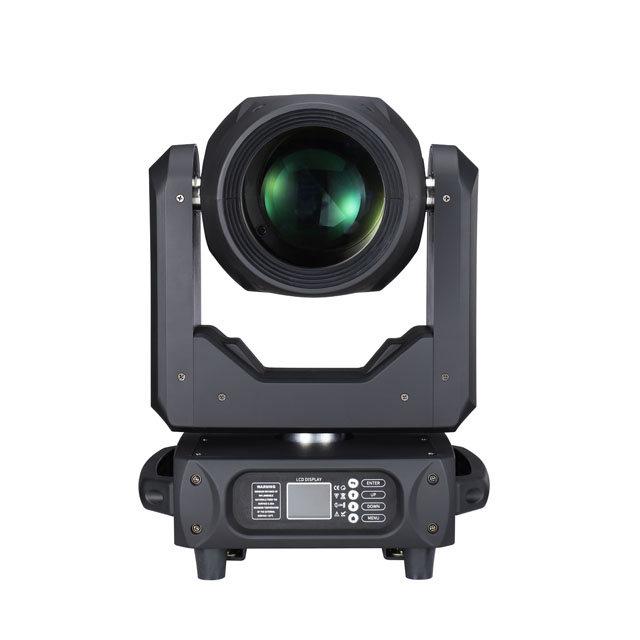
When you prepare to invest in a new rig, the light source technology is your first major hurdle. The industry currently balances three primary engine types. Traditional discharge lamps remain incredibly popular. They offer immense peak intensity at the very center of the beam. However, they incur ongoing maintenance costs because the bulbs burn out and require regular replacement. LED engines are rapidly catching up. They offer significantly lower maintenance overhead and longer lifespans. They do, however, require sophisticated thermal management to prevent overheating. Laser phosphor engines represent the cutting edge. They produce ultra-sharp, parallel lines of light that mimic actual lasers. These engines command a significant premium cost.
You must scrutinize optical precision meticulously. Edge sharpness and color uniformity separate amateur fixtures from professional ones. A poorly designed lens creates a distracting "halo" effect around the central beam. This light spill muddies the air. It diminishes the beam's visual impact and ruins the high-contrast look you want. High-quality optics keep the light entirely contained within its intended narrow column.
Kinetic performance is equally critical. You are not just buying a light bulb; you are buying a robotic arm. A high output beam moving head light must feature incredibly rapid pan and tilt speeds. EDM festivals, rock concerts, and fast-paced broadcasting environments demand split-second motor movements. If the motors drag or stutter, the fixture cannot execute complex, time-coded programming accurately. The fixture will literally fall behind the music.
Finally, examine the internal effects engines. Even a strictly dedicated beam fixture needs versatility. Standard requirements include:
Dual Prisms: These split the single beam into multiple intersecting rays, creating massive, sweeping web effects over the audience.
Color Wheels: Quick-change color wheels allow for rapid strobe coloring, adding intense dynamic impact during musical transitions.
Frost Filters: A frost filter slightly diffuses the intense beam. This temporarily mimics a localized wash light, adding functional versatility to your rig when space is tight.
Environmental ratings heavily dictate your purchasing strategy. The fundamental debate usually centers on IP20 versus IP65 ratings. IP20 fixtures are strictly for dry, controlled indoor environments. Investing in an outdoor beam moving head light with an IP65 rating prevents dust and moisture ingress. This is obviously mandatory for outdoor festivals. However, many production houses now buy IP65 fixtures exclusively for indoor use. Why? Because indoor arenas rely heavily on fluid-based haze machines. This fluid coats the inside of standard IP20 fixtures, degrading the lenses and burning out the electronics over time. An IP65 fixture remains sealed, drastically reducing your internal cleaning intervals.
Thermal management presents another significant implementation reality. High lumen output generates massive heat. Manufacturers use internal cooling fans to manage this temperature. You face a direct trade-off here. Powerful fans create noticeable ambient noise. In loud environments like rock concerts or electronic music festivals, this fan noise is entirely irrelevant. The PA system drowns it out. Conversely, in theatrical environments, corporate presentations, or broadcast studios, a noisy rig will ruin the production audio. You must match the fixture's cooling profile to the acoustic sensitivity of your typical events.
Furthermore, you must rigorously plan your physical infrastructure before deploying these units. Ignorance here leads to dangerous electrical failures.
Power Draw Limits: High-output discharge lamps consume massive amperage upon striking. You must calculate the peak load carefully to avoid tripping venue breakers during a show.
Daisy-Chaining Constraints: Modern fixtures often use PowerCON passthroughs. You cannot daisy-chain endless units together. You must strictly adhere to the manufacturer's linking limits per circuit.
Physical Weight: Weatherized IP65 fixtures carry heavy internal gaskets and thicker casings. They weigh significantly more than their IP20 counterparts. You must verify that your venue's rigging points and trussing can handle this increased payload.
Selecting the correct model requires balancing your venue scale against actual output needs. This framework prevents common specification errors. You want to avoid over-specifying. Putting massive, stadium-grade fixtures into a 500-capacity club wastes budget. It also blinds the audience unnecessarily. Conversely, under-specifying is equally disastrous. If you put small, low-wattage fixtures into a massive arena, the ambient light swallows them whole. You lose the beam effect entirely. Match the lumen output precisely to the throw distance of your room.
Control integration is another critical checkpoint. A beautiful fixture is useless if your lighting console cannot talk to it effectively. Verify seamless integration with standard industry protocols. DMX512 remains the baseline standard. However, massive rigs demand network protocols like Art-Net or sACN. Furthermore, verify the fixture's DMX channel footprint. Complex fixtures with dual prisms and multiple color wheels can easily consume 20 to 30 channels each. Ensure your existing console has enough DMX universes to handle the load.
Never bypass the physical demo phase. Specifying a Beam Moving Head Light purely from a paper spec sheet is a major mistake. Numbers on a page cannot show you the edge sharpness or the color uniformity. Always request a side-by-side shootout. Place the competing fixtures in your actual venue. Turn on your standard haze levels. Turn on your LED video walls to their normal brightness. Only then will you see which fixture actually punches through the chaos and delivers the visual impact you need.
A beam moving head is an incredibly precise tool designed for aerial architecture, not general surface illumination. When deployed correctly, it slices through ambient light to create the dramatic, high-energy structures that define modern live events. Master the balance of these fixtures against your washes and spots to build a truly dynamic rig.
As you plan your next major equipment upgrade, prioritize optical clarity, appropriate IP ratings, and reliable motor speed over pure vanity metrics like theoretical maximum brightness. A sharp, fast beam will always outperform a blurry, slow one. We highly encourage you to review your current rig's visual gaps today. Contact a technical sales representative to arrange a targeted, side-by-side fixture demonstration in your actual performance space.
A: Technically yes, but it is a poor compromise. You can drop in a frost filter to soften the harsh edges and spread the light slightly. However, a beam lacks the complex optical zoom and specialized gobo focusing capabilities of a true spot fixture. It will never replace a dedicated spot for surface projection.
A: Traditional discharge lamps typically last between 1,500 and 3,000 hours before burning out or losing significant brightness. Modern LED engines perform much better, often rated for 20,000 to 50,000 hours. Keep in mind that all sources experience gradual output degradation over their lifespan.
A: Loss of sharpness usually stems from routine maintenance neglect. The most common culprit is a dirty outer lens coated in haze residue. Other causes include a physically degrading discharge lamp, misaligned internal reflectors, or dust buildup on the internal prisms and color wheels.
A: It is not legally mandatory, but it is highly recommended. Indoor environments use heavy fluid-based haze. This sticky residue gets sucked into IP20 fixtures by their cooling fans, damaging internal optics. An IP65 fixture remains sealed, which drastically reduces your internal cleaning intervals and extends the fixture's life.


