
 English
English
English

Views: 0 Author: Site Editor Publish Time: 2026-07-30 Origin: Site


Live events rely heavily on powerful illumination. Discharge lamps produce unmatched brightness. They deliver serious visual punch for major productions. However, they also generate extreme heat. This concentrated heat constantly threatens delicate internal components. LED technology advances every single year. Yet, raw discharge intensity remains the industry standard. Stadiums and large-scale tours still demand this specific power. You simply cannot ignore cooling architecture during procurement. Doing so directly leads to high maintenance costs. Premature fixture failure will quickly drain your production budget.
We designed this technical evaluation guide specifically for you. Production managers and system integrators need reliable hardware metrics. You must assess thermal management systems carefully. Learn how to evaluate these critical features before making a decision. We will show you exactly what to look for inside the fixture. You will discover how active and passive cooling systems work together. Protect your lighting investment by making informed, highly technical choices today.
Discharge lamps require precise thermal management to prevent dichroic glass degradation, CMY flag warping, and catastrophic lamp failure.
The best cooling systems utilize a hybrid approach: variable-speed maglev fans, optimized airflow pathways, and high-density copper or aluminum heat sinks.
Evaluating a high output beam moving head light requires balancing fan noise (dB ratings) against thermal efficiency, especially for theatrical or broadcast applications.
Smart thermal sensors and automatic cut-off switches are non-negotiable features for safety and compliance in any professional moving head light.
Discharge bulbs operate under extreme physical conditions. The electrical arc inside the lamp often exceeds 800°C. This intense heat source sits incredibly close to sensitive parts. Delicate optical lenses rest just inches away. CMY color mixing flags face constant thermal bombardment. Dichroic glass filters endure massive temperature swings. Heat extraction must happen immediately. Failing to remove this energy destroys the internal mechanics quickly.
Inadequate cooling carries a massive financial impact. Heat melts complex glass gobos easily. Color wheels burn and lose their saturation. Shattered bulbs mid-tour create disastrous operational failures. You must pause the show to fix the rig. Technicians have to bring the truss down safely. Labor costs multiply instantly during these emergency repairs. You also lose valuable rehearsal time fixing broken units. Buying replacement optics constantly ruins your equipment budget. The hardware essentially eats your profit margins.
Poor thermal extraction directly causes performance degradation. Excessive heat stresses the optical glass over time. Colors begin shifting away from their true hues. Vibrant reds turn muddy. Deep blues wash out into dull purples. Premium discharge bulbs should last between 1,500 to 2,000 hours. A poorly cooled fixture cuts this lifespan in half. You end up buying expensive replacement bulbs far too often. Maximizing fixture ROI requires keeping the internal temperature strictly controlled.
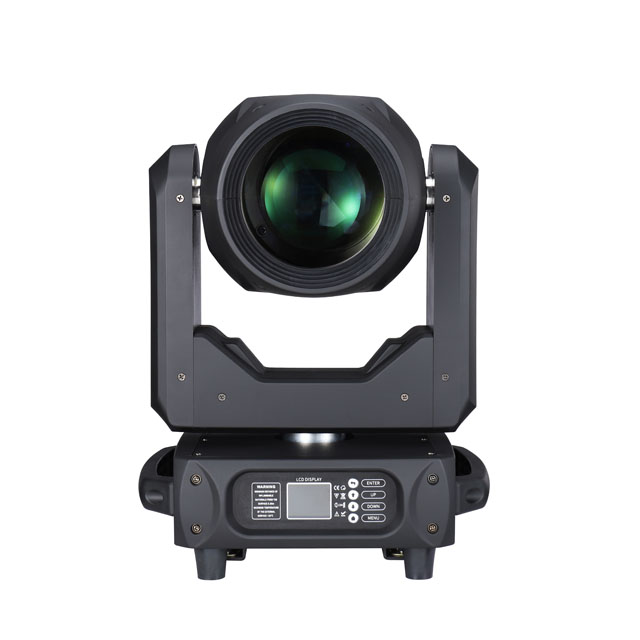
Engineers use multiple methods to keep fixtures cool. Modern designs combine mechanical fans and physical metal structures. We call this a hybrid thermal approach.
Mechanical fans drive cold air through the unit. Industry standards favor maglev technology over traditional sleeve bearings. Sleeve bearings use liquid lubricants to reduce friction. High internal heat dries these lubricants out rapidly. The bearings then grind, create noise, and eventually seize. Maglev fans utilize magnetic levitation to suspend the rotor. They eliminate physical friction almost entirely. They run quieter and last significantly longer. Mechanical failure drops close to zero over a five-year lifespan.
Variable-speed control provides another crucial active feature. Smart fans adjust their RPM dynamically. They monitor the current lamp output constantly. They also read the ambient room temperature. If the lamp runs at 50% power, the fans slow down. This reduces unnecessary ambient noise. When the lamp strikes full intensity, the fans ramp up instantly. Static-speed fans either overwork themselves or fail to cool adequately.
Passive cooling relies on physical metal to absorb heat. Heat sinks pull energy away from the lamp base. Manufacturers typically choose between aluminum extrusion and copper-core blocks. Copper conducts heat much faster than aluminum. It draws thermal energy away from the igniter rapidly. Aluminum weighs less and costs less to manufacture. High-end units often use a copper core surrounded by aluminum fins. This blends fast heat transfer and manageable weight.
The external chassis acts as a secondary heat sink. A well-designed stage beam moving head light uses its metal shell to dissipate energy. Heat transfers from the internal blocks into the outer casing. Ambient room air then cools the external shell naturally. This reduces the workload on the internal maglev fans.
Airflow routing determines how efficiently fans cool the components. Engineers place intake and exhaust vents strategically. Cold air must hit the lamp base directly. The breeze then sweeps across the sensitive optics. Finally, hot air exits through exhaust vents quickly. Poor designs create dead zones inside the head. Hot air gets trapped near the circuit boards. This bakes the electronic components slowly over time. A true wind tunnel effect ensures continuous, rapid air replacement.
Below is a comparison of common heat sink materials used in lighting fixtures.
Material Type |
Thermal Conductivity |
Weight Impact |
Manufacturing Cost |
|---|---|---|---|
Standard Aluminum |
Good (205 W/m·K) |
Lightweight |
Low |
Solid Copper |
Excellent (385 W/m·K) |
Very Heavy |
High |
Hybrid (Copper Core / Aluminum Fins) |
Very Good |
Moderate |
Medium |
Evaluating hardware requires looking past the marketing brochures. You must look at specific cooling metrics. These dimensions determine how the unit performs in real-world environments.
You must balance the decibel (dB) rating against actual cooling needs. Loud fans push a lot of air. They keep the fixture incredibly cool. However, loud fans ruin quiet performances. A 38dB fan rating works perfectly for rock touring. The concert audio easily masks the fan noise. However, a 38dB rating disqualifies the fixture for quiet theater applications. Television studios also require near-silent operation. Broadcast environments need fans rated below 28dB. You have to match the noise profile to your specific venue type.
Cooling systems face a constant battle against particulate matter. Open airflow designs pull in maximum cold air. Unfortunately, they also pull in massive amounts of dust. This creates a difficult trade-off. High IP ratings (like IP65) seal the unit completely. Sealed units rely heavily on internal circulation and massive chassis heat sinks. IP20 rated indoor units use open fans.
You must evaluate air filter accessibility on indoor units. Dust builds up quickly during a busy tour. Technicians need to clean these filters during stage resets. If accessing the filter requires removing twelve tiny screws, maintenance will suffer. The best designs feature snap-out filter trays. Crews can clean them in seconds.
Cooling relies heavily on intelligent software. Modern fixtures use thermistors to monitor internal zones continuously. You want fixtures featuring smart thermal throttling. If fan RPM drops below a safe threshold, the software intervenes. It automatically dims the lamp to reduce heat generation. If temperatures reach a critical danger zone, the system engages thermal cut-offs. It shuts the lamp down completely to prevent physical melting. A true professional moving head light never relies solely on fans. It uses software as a fail-safe.
Lighting designers love small, compact fixtures. Riggers also prefer lighter units. However, shrinking the fixture removes passive thermal mass. Smaller metal casings absorb less heat. These compact units must compensate somewhere. They usually rely on loud, high-speed fans to survive. You must evaluate this trade-off carefully. A slightly heavier fixture often provides much better, quieter cooling. The extra metal mass handles the heat load naturally. We recommend testing both lightweight and mid-weight options side-by-side.
Here are several common mistakes buyers make regarding cooling evaluations:
Ignoring fan noise ratings until the fixture is installed in a quiet theater.
Assuming all active fans use maglev technology.
Forgetting to check the labor time required to clean internal dust filters.
Choosing ultra-compact fixtures without considering the increased fan noise.
Paper specifications rarely match the brutal reality of touring. Stage environments introduce unpredictable variables. These external factors stress cooling architectures heavily.
Standard stage atmospheric effects create major cooling hazards. Haze fluid uses mineral oils or water-based glycols. The fluid atomizes into tiny particles. Fixture fans suck these sticky particles inside the head constantly. Dust then clings to this sticky residue. This combination chokes cooling fans rapidly. The fan blades become heavy and slow down. The airflow paths clog completely. Rapid overheating occurs if crews do not maintain the units. You must factor stage haze into your maintenance schedule.
How you hang a fixture impacts its cooling efficiency. Hanging a fixture vertically changes natural heat convection. Heat rises straight up towards the main lens. Hanging a fixture horizontally pushes heat towards the back housing. Different hanging angles stress different exhaust fans. Natural convection either fights the fans or helps them. A robust high output beam moving head light operates safely in any orientation. Cheaper units often overheat when rigged at awkward angles.
Budget fixtures often skimp on critical thermal sensors. They use cheap sleeve bearing fans. They omit emergency cut-off software entirely. This creates a literal fire hazard on stage. If a cheap fan fails, the lamp keeps burning at full intensity. The internal temperatures skyrocket in minutes. Lenses crack. Wiring insulation melts away. Ultimately, the lamp explodes under the pressure. Exploding glass scatters across the stage below. Professional-grade models prevent this catastrophic failure entirely. They shut down long before danger occurs.
You need a repeatable testing framework for candidate fixtures. Do not trust spec sheets alone. Put the hardware through physical stress tests.
The "Burn-In" Test: Run candidate fixtures at 100% output for 4 straight hours. Monitor the external chassis temperature carefully. Listen to the fan noise stabilization. Cheap fans will whine as they heat up. Quality fans will maintain a smooth, steady hum.
DMX Control Verification: Check the DMX channel profiles. See if you can manually override the cooling fans. Lighting programmers need this control. They adjust fan speeds via DMX for critical low-noise moments during a show.
Maintenance Assessment: Have a technician attempt a standard field strip. Ask them to remove the head covers. Have them access the main cooling fans and filters. Time the entire process. If it takes more than 5 minutes, reject the fixture. Touring crews do not have time for complex disassembly.
Warranty Verification: Read the manufacturer’s warranty fine print. Ensure the policy explicitly covers heat-induced damage. Look for coverage regarding melted optics and burnt internal motors. The warranty should hold up assuming you perform regular filter maintenance.
Following this testing framework reveals hidden hardware flaws quickly. You will identify robust cooling systems effortlessly.
Your lighting rig requires extreme reliability night after night. A Discharge Moving Head Light is only as reliable as its cooling system. Generating massive output means nothing if the unit melts itself. High intensity proves useless if the fixture shuts down mid-show. You must prioritize thermal architecture during your purchasing process. Protect your investment from the inside out.
We advise buyers to request detailed technical specification sheets immediately. Ask manufacturers for precise fan dB ratings across different power modes. Demand documentation proving thermal safety certifications. Review the heat sink materials and airflow routing diagrams. Perform these steps before you ever request a physical demo. Smart evaluation ensures your lighting rig survives the harshest touring conditions.
A: You should clean the fans typically every 50–100 hours of active use. We also recommend cleaning them after every major outdoor festival or tour leg. Consistent maintenance prevents heavy dust and sticky haze residue buildup. Keeping the fan blades clean ensures maximum RPM and stable thermal extraction.
A: A professional moving head light features a dedicated thermal sensor. This sensor monitors the internal ambient temperature constantly. If a fan fails, the temperature spikes rapidly. The sensor will immediately cut power to the lamp. This automatic shut-off prevents catastrophic overheating, severe optical damage, or a dangerous bulb explosion.
A: It is highly discouraged. Modifying the cooling system alters the carefully engineered CFM (Cubic Feet per Minute) airflow. Aftermarket fans rarely match the required static pressure. This modification automatically voids your factory warranty. It also risks severe thermal damage to the internal electronics and delicate optical glass.


