
 English
Views: 0 Author: Site Editor Publish Time: 2026-09-20 Origin: Site


Feel the visceral impact of concert lighting hitting your retinas exactly when the bass drops. It serves as the definitive tool for dictating crowd energy. Live music relies heavily on this intensity to create unforgettable visual peaks. Strobe effects push audience adrenaline to its absolute limit.
Production designers face a delicate balancing act on every tour. They must deliver high-impact visual effects consistently. However, they also navigate strict rigging limits, restrictive power draw constraints, and crucial safety regulations. Pushing stage design boundaries often strains older venue infrastructure. Planners struggle to fit enough lighting firepower onto limited truss spaces.
The lighting industry recently shifted away from single-use traditional strobes. Designers now favor highly efficient, multi-functional fixtures. You will discover how a modern Strobe Wash Light solves complex staging challenges. We will explore key operational purposes, safety compliance, and critical evaluation metrics to maximize your production value. Hybrid fixtures completely redefine modern stage capabilities.
Strobe lights dictate the psychological pacing of a concert, isolating moments, building tension, and driving climactic drops.
The modern strobe wash light provides dual functionality, replacing single-use fixtures by combining high-intensity blinding with ambient color mixing.
Implementing strobe effects requires strict adherence to safety and accessibility protocols, including hardware refresh rate limits and venue warning signage.
Evaluating strobe fixtures for commercial use demands prioritizing IP ratings, thermal management, pixel-mapping capabilities, and power efficiency.
Lighting designers use strobes to visually match the music's underlying BPM. This aggressive technique dictates the emotional peaks and valleys of a setlist. Fast flashes build massive energy during heavy up-tempo tracks. Conversely, sparse pulses create uncomfortable tension during quieter musical bridges. It controls audience adrenaline directly. Programming precise hit points ensures the visual pacing matches the audio perfectly. Designers map rapid flashes to snare drum hits or heavy synth drops. This synergy makes the music feel physically impactful.
The stroboscopic effect manipulates how audiences perceive artist movement. We achieve this illusion by flashing high-intensity bursts at specific intervals in total darkness. The human brain stitches these brief illuminated moments together artificially. It creates a surreal, disjointed slow-motion appearance on stage. Dancers look like they are defying gravity completely. Drummers appear to strike their cymbals in discrete, robotic frames. Mastering this illusion requires absolute pitch-black conditions between the strobe flashes. Even minor ambient light ruins the visual trick.
Intense backlighting creates stark, high-contrast silhouettes of stage performers. Designers position fixtures directly behind artists, aiming them straight toward the audience. The sudden burst completely washes out the performer's facial features. It leaves a striking dark outline against the surrounding stage architecture. This isolates the artist visually during dramatic solos. It also highlights the sheer scale of the stage rig behind them. Audiences experience a sudden shift in spatial depth.
Strobe effects break the fourth wall seamlessly during a show. They illuminate the crowd brightly during critical musical moments. This creates a deeply shared environmental experience among strangers. Fans stop watching the stage and temporarily become part of the spectacle. It triggers a massive release of collective energy and screaming. We use continuous blinders right before a song's final chorus hits. It bridges the physical gap between the performer and the back row.
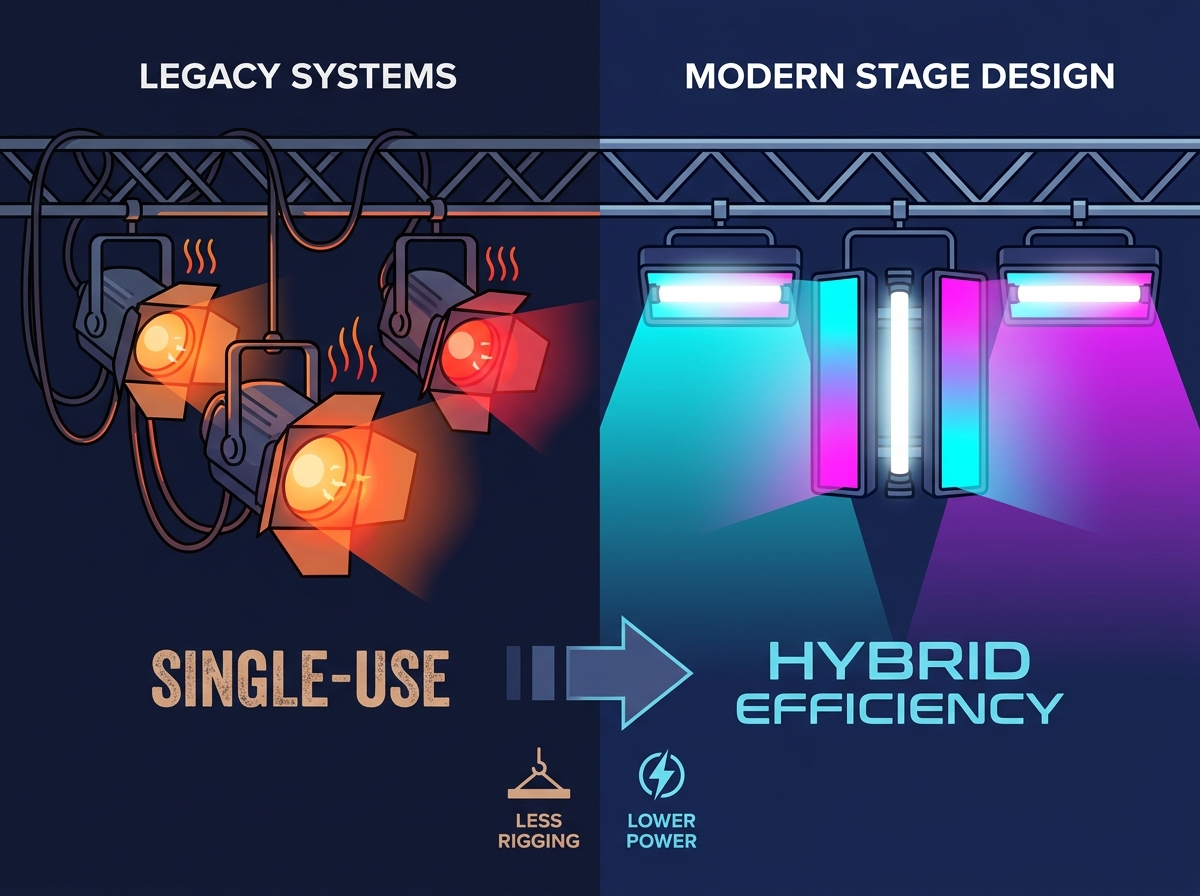
Older Xenon strobes introduced significant limitations for touring productions. They demanded massive power consumption and generated excessive radiant heat. Designers felt restricted by their absolute single-color output limitation. High failure rates during long tours frustrated production crews constantly. Xenon bulbs degraded quickly under heavy daily use. Glass tubes shattered easily during rough truck transport. Crew chiefs wasted valuable time replacing expensive bulbs instead of focusing on programming.
The modern Strobe Wash Light offers a revolutionary dual-engine architecture. It integrates dedicated white LED tubes for intense strobing purposes. Surrounding RGBW panels handle ambient color washing simultaneously. This hybrid approach delivers two distinct visual engines inside one robust chassis. You get blinding flashes and rich saturated colors together seamlessly. Designers no longer choose between a strobe or a wash fixture. They command both tools from a single DMX footprint.
Combining a wash luminaire and a high-output strobe transforms logistics. We see immediate benefits in daily rigging efficiency.
It drastically reduces essential truck space needed for touring equipment.
Crews cut daily rigging time during rushed stage load-ins.
Designers lower the total fixture count hanging on the truss.
Less weight overhead simplifies complex structural engineering approvals.
Fewer required data cables streamline the entire network infrastructure.
Fewer fixtures mean faster deployment in unpredictable festival environments.
LED efficiency transforms stage power distribution entirely. Productions easily daisy-chain multiple fixtures on standard electrical circuits. They rarely worry about tripping critical breakers mid-show anymore. This low amperage draw frees up essential power for audio and video departments. Legacy setups required dedicated massive dimming racks and heavy feeder cables. Modern LED units plug directly into localized power distribution boxes. It simplifies the entire electrical schematic for the touring crew.
Multi-zone control unlocks kinetic, sweeping visual effects immediately. Programmers move beyond just full-fixture, full-intensity simple flashes. They address individual LED segments separately within the fixture chassis. This allows intricate pixel mapping and fast chases across the rig. The lights appear to move organically without actual mechanical pan or tilt. You can program center-out wipes or alternating matrix patterns. Media servers feed low-resolution video content directly onto the fixture faces for stunning visuals.
Modern LEDs feature highly advanced internal thermal management systems. Designers leverage this to run a continuous blinder mode safely. The fixture sustains 100% output for extended durations during climaxes. Older strobes would trigger a thermal shutdown almost immediately under these conditions. Active cooling fans keep the internal LEDs safely within optimal operating temperatures. The light maintains its peak brightness without sudden dimming or color shifting.
Blending harsh strobe frequencies over saturated RGBW backgrounds creates magic. It builds layered, multi-dimensional stage looks easily. The color wash sustains the emotional mood of the scene. Meanwhile, the white strobe tubes punch cleanly through the color to add kinetic energy. It delivers a massive visual impact without muddying the stage palette. You can create a deep blue ambient stage while strobing crisp white accents. The contrast looks phenomenal on broadcast cameras.
Adjustable PWM (Pulse Width Modulation) frequencies remain absolutely vital. Strobe effects must translate clearly on professional broadcast cameras. If the PWM mismatches the camera shutter, ugly banding ruins the expensive shot. High PWM rates ensure audience smartphones capture clean videos for social media. We constantly adjust LED refresh rates to sync perfectly with the video director's equipment.
Camera and PWM Synchronization Guide
Camera Frame Rate | Shutter Angle | Recommended Minimum PWM |
|---|---|---|
24 fps (Cinema) | 180 degrees | 1200 Hz |
30 fps (Broadcast) | 180 degrees | 2400 Hz |
60 fps (High Speed/Sports) | 90-180 degrees | 4000 Hz+ |
Smartphone Capture | Variable | 6000 Hz+ |
We must acknowledge serious biological impacts and event accessibility challenges. Specific flash frequencies trigger severe photosensitive epilepsy risks. The 5–30 Hz range acts as the primary neurological danger zone. Concert organizers must protect vulnerable attendees from sudden seizures. Ignorance of this biological response causes severe harm and opens legal liabilities. Lighting designers hold a distinct ethical responsibility regarding their programming choices. Hitting the crowd with 15 Hz strobes for prolonged periods remains incredibly dangerous.
Venues face strict legal and ethical requirements today. They must post clear, highly visible strobe warnings proactively. These urgent notices belong right at physical venue entrances and bars. Ticketing portals should also display mandatory warnings during the digital purchase process. Informed consent protects both the attending audience and the production company. Ushers should receive proper training on identifying and assisting distressed patrons during heavy strobe sequences.
Modern consoles provide robust hardware and software failsafes easily. Current DMX profiles allow lighting designers to hard-limit flash rates globally. Programmers cap maximum intensities to stay well within regional safety guidelines. This prevents accidental manual overrides from violating safe frequency thresholds mid-show. You can program a master inhibitor fader specifically for the strobe channels. If an issue occurs in the crowd, the operator kills the flashes instantly without dropping the color wash.
Balancing high-energy impact requires thoughtful visual rest periods. Relentless flashing causes severe eye fatigue and headaches. We employ specific design strategies to ensure maximum accessibility.
Avoid continuous rapid flashing for durations longer than 30 seconds.
Transition immediately to static wash lighting after a heavy strobe sequence.
Keep intense blinder moments aimed slightly above direct eye level.
Vary the strobe frequency constantly to prevent rhythmic neurological entrainment.
Utilize deep saturated colors during strobing to reduce harsh glare.
IP65-rated enclosures remain absolutely non-negotiable for outdoor touring today. Festival cross-rentals demand extreme weather resistance constantly. Rain ruins unsealed electronic fixtures instantly on exposed outdoor stages. IP65 seals protect sensitive internal components against corrosive pyrotechnic dust and moisture. They ensure reliable daily performance during unpredictable summer festival seasons. Buying indoor-only fixtures severely limits your rental revenue potential. True outdoor durability requires thick gaskets and sealed data connections.
You must evaluate peak lumen output alongside the internal cooling system. Continuous high-intensity use generates massive internal heat rapidly. Active cooling fans prevent severe output throttling during long performances. Passive cooling might result in heavily dimmed flashes during climactic songs as the fixture protects itself. Excellent thermal management sustains peak brightness all night long. Check the spec sheet for thermal derating curves before purchasing. Massive output numbers mean nothing if the fixture overheats in ten seconds.
Scalable control profiles grant programmers essential creative flexibility. Basic macro modes allow rapid programming for tight, rushed festival setups. You access built-in chases utilizing very few DMX channels. Conversely, high-channel pixel modes unlock complex media server integration. The fixture should easily scale to match the programmer's available time and console capacity. Having a 10-channel mode and a 120-channel mode on the same fixture provides ultimate versatility.
Assess physical hardware durability for safe, rapid daily deployment. Yoke strength prevents heavy fixtures from drooping under their own weight. Universal omega bracket compatibility speeds up standard truss mounting significantly. Reliable physical tilt-lock mechanisms protect the motorized parts during rough truck transport. Weak hardware leads to bouncing fixtures when the stage vibrates from heavy subwoofers. You need thick aluminum chassis construction to survive years of road abuse.
Strobe lighting evolved far beyond a blunt visual instrument. It now serves as a highly nuanced storytelling tool for modern productions. The advent of hybrid fixtures completely changed the game for lighting designers.
Investing in versatile, multi-engine strobe equipment yields dramatically better production value. Multi-functional fixtures guarantee higher rental utilization year-round across different event types. You streamline your logistics while expanding your creative palette.
Review your current lighting inventory and evaluate the latest technical spec sheets. Contact a dedicated sales engineering team to request an in-person product demo. Secure a customized staging quote to elevate your next major tour's visual impact.
A: A dedicated strobe serves a single purpose: emitting intense, rapid bursts of white light. It usually lacks color capabilities. A modern hybrid fixture shifts away from single-purpose flashing. It combines dedicated high-output strobe tubes with RGBW panels. This allows simultaneous color mixing, ambient washing, and intense blinding from one unit.
A: The industry standard identifies the 5 to 30 flashes-per-second (Hz) range as the primary danger zone for photosensitive epilepsy. Flashes within this threshold heavily impact the brain's visual cortex. Mitigation tactics include limiting flash durations, capping DMX refresh rates, and programming extensive periods of visual rest between high-intensity songs.
A: Yes, but only if they feature proper environmental protection. You must check for certified IP65 or IP66 ratings. These ingress protection ratings ensure the enclosure completely blocks dust and withstands low-pressure water jets or heavy rain. Indoor-rated fixtures will fail quickly when exposed to unpredictable festival weather conditions.
A: Camera flicker occurs when the LED's dimming refresh rate conflicts with the camera's shutter speed. You prevent this by using fixtures with adjustable PWM (Pulse Width Modulation) frequencies. Increasing the PWM frequency well above the camera's frame rate—typically 1200Hz or higher—eliminates ugly banding and ensures smooth broadcast feeds.


