
 English
Views: 0 Author: Site Editor Publish Time: 2026-07-29 Origin: Site


The shift from traditional discharge lamps to LED technology in professional lighting is no longer just an aesthetic upgrade. It is a strict operational necessity. Modern venues face increasing pressure to lower energy consumption, streamline rigging processes, and deliver flawless visual experiences. Beam lights define themselves by a tight, parallel output. They typically operate between a 1° and 5° angle. Today, LED variants capture the majority of venue budgets. They deliver intense, slicing columns of light without the extreme heat generated by older fixtures.
This guide will align your specific venue requirements with the correct equipment configurations. We will examine how scale, environment, and infrastructure dictate your lighting choices. You will learn how to evaluate photometric data realistically. You will also discover how to match an LED Beam Moving Head Light to your primary programming style. By understanding these technical variables, you can secure measurable returns on your hardware investments.
Large-scale live music venues and EDM festivals rely on LED beam moving head lights for high-contrast aerial effects, prioritizing throw distance and rapid pan/tilt speeds.
Outdoor and touring productions increasingly require waterproof LED beam light fixtures to eliminate costly weather-protection enclosures and reduce rigging times.
Small-to-medium venues (clubs, regional theaters) maximize budgets by deploying LED beam wash moving head light hybrids that combine aerial punch with stage coverage.
Procurement success depends on validating real-world lumen output against power draw, acoustic noise limits, and verifiable IP ratings.
Eliminating traditional lamp replacements instantly reduces your operational costs. Traditional discharge bulbs generally fail or degrade after 1,500 to 2,000 hours of use. Venue technicians must regularly climb trusses to swap hot, expensive bulbs. LED engines bypass this problem entirely. Furthermore, traditional fixtures emit massive amounts of heat. This thermal output forces venue HVAC systems to work exponentially harder. Replacing older units drastically lowers the cooling load in enclosed spaces. You save money on electricity and maintenance simultaneously.
Power efficiency scales rapidly across large installations. Older lighting rigs required heavy power distribution infrastructure. Venues needed thick copper cabling and massive generator capacities just to turn the rig on. LED fixtures draw significantly lower amperage. You can daisy-chain more fixtures per power drop. This efficiency reduces the need for expensive, bulky power cables. Production companies can load fewer cable trunks into their trucks. Permanent venues can expand their lighting plots without upgrading their main electrical panels.
Lifespan and degradation metrics heavily favor solid-state lighting. A quality LED engine routinely hits 50,000 hours of operational life. More importantly, it maintains color consistency. Traditional discharge bulbs suffer rapid color-temperature degradation. A bulb might output a crisp white on day one, but it shifts to a muddy yellow a month later. LEDs ensure consistent looks across a long tour or a multi-year installation lifecycle. You never have to worry about mismatched beam colors ruining a synchronized aerial effect.
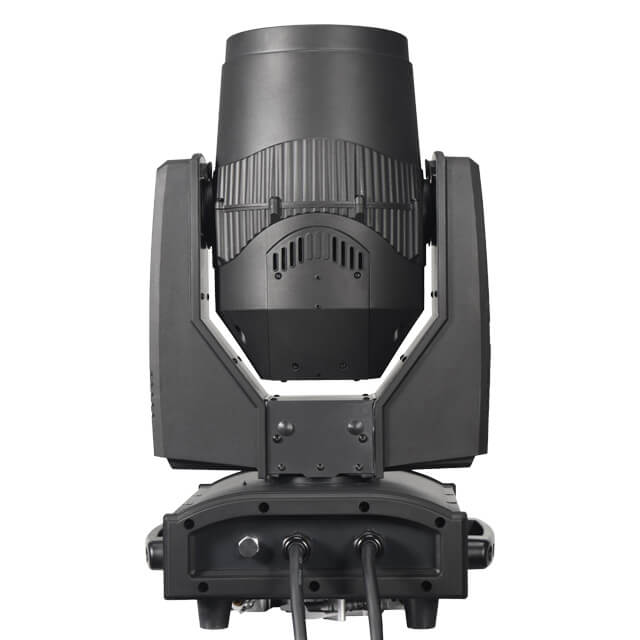
Electronic dance music requires aggressive visual programming. Success heavily depends on ultra-fast motor speeds. Slow fixtures simply cannot keep up with high-BPM tracks. Lighting designers need high-intensity output to cut through dense atmospheric haze. Wide washes get lost in thick smoke. You need a concentrated, piercing column of light. Dedicated tight-angle fixtures perform best here. An RGBW LED beam light provides sharp, saturated mid-air geometry. A 1° to 2° beam angle guarantees maximum contrast against the dark club environment.
Outdoor stages present unique environmental hazards. Rain, humidity, and extreme dust destroy internal electronics quickly. Success criteria for touring productions include environmental resilience and structural durability. Standardized DMX and Art-Net profiles are also mandatory for quick console patching. The ideal configuration is a fully sealed waterproof LED beam light carrying an IP65 rating or higher. This technology eliminates the need for bulky rain domes. Rain domes catch wind, delay rigging schedules, and look terrible on camera. Sealed fixtures mount directly to the truss, saving both time and labor.
Acoustic and visual constraints define theatrical and broadcast spaces. Success requires near-silent operation. Loud cooling fans distract audiences during quiet monologues or acoustic performances. You also need flicker-free LED refresh rates. High-definition television cameras detect pulse-width modulation (PWM) easily. Smooth 16-bit dimming curves are vital for graceful theatrical fades. Venues often select an LED beam wash moving head light for these spaces. Hybrids serve dual purposes. They act as sharp beams for dramatic effects and wide washes for subject lighting. This versatility maximizes limited truss space.
Evaluating photometric data requires specific industry knowledge. Do not rely on theoretical raw lumen claims printed on a brochure. You must evaluate lux-at-distance charts. Optical efficiency matters far more than raw output. A highly efficient 200W LED beam can easily outperform a poorly designed 400W LED spot at 50 feet. The tight lens focuses all available light into a concentrated area. Review the center beam lux measurements at 10, 20, and 30 meters. This data reveals true punch.
Color mixing systems directly impact programming capabilities. Additive mixing uses individual RGBW LED chips. Substantive mixing uses a white LED engine paired with CMY glass flags. Additive engines execute rapid color snaps perfectly. They change colors in a fraction of a second. Substantive CMY engines excel at slow, theatrical color blending. They create delicate pastels gracefully. Choose additive mixing for high-energy clubs. Choose CMY subtractive mixing for theatrical stages.
Acoustic footprints separate professional fixtures from cheap alternatives. You must check the decibel (dB) rating of cooling fans and pan/tilt motors. Arena designers generally ignore noise ratings. PA systems easily drown out fixture fans in a stadium. However, acoustic noise ruins intimate theater productions. Verify the dB rating at a one-meter distance. High-end fixtures offer variable fan control modes via DMX. You can force the fans into a silent mode during critical broadcast moments.
Venue Type | Primary Requirement | Recommended Optical System | Crucial Feature |
|---|---|---|---|
EDM / Mega-Club | Speed and Haze Penetration | Tight 1°-2° Fixed Lens | Ultra-fast Pan/Tilt Motors |
Outdoor Touring | Weather Protection | Sealed Optics | IP65 Rating Minimum |
Theater / Broadcast | Silence and Smooth Fades | Motorized Zoom (Hybrid) | High PWM Refresh Rates |
Weight limits govern every rigging decision. High-output LED fixtures require substantial power supplies and massive heat sinks. Modern fixtures sometimes weigh more than older discharge models. You must calculate truss load limits carefully. A rig safely holding twenty older fixtures might only support fifteen newer LED models safely. Always consult a certified rigger. Ignoring weight limits endangers performers and audiences. Ensure your chain motors handle the aggregate weight smoothly.
Data topologies demand careful planning. Complex fixtures consume many DMX channels. A single advanced light might require thirty channels for full 16-bit control. Large installations quickly exhaust standard DMX universes. You must utilize RDM (Remote Device Management). RDM allows technicians to address and troubleshoot fixtures directly from the lighting console. You do not need a boom lift to change a DMX address. RDM saves hours of labor during complex arena load-ins.
Thermal management failures plague budget fixtures. Professional lights use highly engineered cooling systems. Cheap models skimp on internal heat sinks. Poor thermal design inevitably leads to thermal throttling. When the LED engine overheats, the fixture automatically dims itself to prevent melting. Your carefully programmed show suddenly looks dark and uneven mid-performance. Investing in reputable brands ensures consistent lumen output from the first cue to the final bow.
Procuring professional stage lighting requires rigorous verification. Manufacturers sometimes obscure critical data. You must analyze specification sheets critically. Protect your investment by following a strict evaluation process before signing any purchase orders.
Beware of Inflated Specs: Learn how to spot exaggerated wattage claims. Some brands confuse total fixture power draw with the actual LED engine wattage. A fixture drawing 350W from the wall might only contain a 150W LED engine. Always locate the specific diode wattage on the technical data sheet.
Validating Ingress Protection: Do not accept vague terminology. A "weather-resistant" label is absolutely not the same as a certified IP rating. Look for sealed data and power connections. Professional fixtures utilize Seetronic or True1 locking connectors. Validated IP65 ratings guarantee protection against torrential rain and microscopic dust.
Warranty and Parts Availability: Moving heads contain hundreds of moving parts. Stepper motors wear out. Driver boards eventually fail. Ensure your chosen manufacturer maintains domestic parts distribution. Waiting weeks for an overseas shipment causes unacceptable venue downtime. Fast access to spare parts keeps your rig operational year-round.
Procurement success relies entirely on matching hardware to your specific operational environment. A massive outdoor festival demands a completely different approach than a quiet regional theater. You must analyze your venue size, environmental exposure limits, and primary programming style. Every LED beam moving head light serves a specific purpose in modern production design.
We advise technical buyers to request detailed photometric data sheets immediately. Ask manufacturers for IES files. Import these files into your lighting visualization software. Arrange a side-by-side shootout with physical demo units before committing to a multi-fixture purchase. Seeing the optical efficiency and color mixing in your actual venue guarantees a successful lighting upgrade.
A: A dedicated beam uses a fixed, tight lens to project a narrow column of light. It delivers maximum punch through atmospheric haze. A wash hybrid incorporates a motorized zoom lens. It acts as a tight beam when zoomed in, but widens to cover a stage when zoomed out. You trade absolute intensity for multi-purpose versatility.
A: Yes, many indoor venues benefit greatly from IP65 fixtures. The sealed chassis keeps out nightclub dust, sticky haze fluid residue, and concert confetti. This drastically reduces your internal cleaning schedules and extends the life of internal optical components and stepper motors.
A: Yes. Modern additive engines use a dedicated "W" (white) diode alongside the red, green, and blue chips. Advanced color-temperature macros balance these diodes seamlessly. The lighting console easily outputs a crisp, cold daylight white or a warm tungsten-emulating white on demand.
A: High-quality LED beams rival or exceed traditional discharge lamps in output equivalency. They draw significantly less power and generate minimal heat. Most importantly, LEDs completely eliminate expensive bulb replacement schedules. Your lighting rig maintains consistent color temperatures across years of heavy usage.


