
 English
Views: 0 Author: Site Editor Publish Time: 2026-06-08 Origin: Site


Modern production design often holds a deep, underlying tension. Directors and audiences naturally crave the warm, nostalgic aesthetic of classic vintage tungsten lamps. However, technical directors simply cannot justify the massive power draw, searing heat, and constant maintenance these traditional halogens demand. We are now witnessing a rapid industry transition. Upgrading to LED retro fixtures acts as a highly pragmatic solution to successfully bridge this stylistic gap. They deliver authentic old-school charm while relying on highly efficient, modern circuitry underneath. Upgrading to a modern Retro Stage Light requires careful evaluation from your technical team. You must analyze dimming curves, color rendering, and DMX capabilities closely. Doing so ensures the vintage illusion holds up under professional scrutiny without compromising operational efficiency.
Modern LED retro fixtures reduce power consumption and heat emission by up to 80% while mimicking traditional tungsten glow.
Authentic vintage effects rely on specific hardware capabilities, including 16-bit dimming curves and dedicated amber/warm-white chips (Amber Shift/Red Shift).
Evaluating a retro stage light requires checking PWM (Pulse Width Modulation) refresh rates to prevent banding on camera during broadcast or livestreaming.
Successful implementation demands matching the fixture’s DMX footprint with your console’s capacity, especially for pixel-mappable models.
Lighting professionals constantly battle infrastructure limits. Traditional vintage fixtures require massive dimmer racks to function correctly. They demand heavy power distribution systems. Venue technicians spend hours replacing burned-out bulbs during rehearsals. Furthermore, these older halogens generate tremendous amounts of heat. This thermal output forces venues to run their HVAC systems at absolute maximum capacity. It creates significant operational friction for everyone involved.
LED technology completely rewrites this operational math. You instantly achieve massive reductions in energy consumption. Technicians can comfortably daisy-chain multiple LED fixtures on a single standard 15A or 20A circuit. Compare this reality to conventional methods. Running older 1000W blinders often requires dedicated, heavy-gauge power lines for just a few units. The efficiency gained by switching directly impacts your day-to-day operations.
Consider the daily safety improvements on set. Old halogen fixtures get dangerously hot within minutes. They pose severe burn hazards to stagehands and performers. LED technology solves this persistent problem. Modern fixtures remain relatively cool to the touch even after hours of operation. This drastically reduces accidental fire risks near drapes or scenery. Your talent stays far more comfortable on stage. Additionally, utilizing safer equipment helps venues easily meet strict compliance rules and insurance requirements.
Metric | Traditional Halogen Fixtures | Modern LED Retro Fixtures |
|---|---|---|
Power Draw | Extremely high (typically 500W to 2000W+ per unit) | Very low (typically 50W to 300W per unit) |
Daisy-Chaining | Rarely possible without heavy distros | Easily link multiple units on one 20A circuit |
Heat Emission | Severe; heavily impacts venue HVAC cooling loads | Minimal; cool to the touch during operation |
Bulb Lifespan | Short (approx. 500 to 2,000 hours) | Long-lasting (50,000+ hours typical) |
Creating a believable vintage aesthetic requires more than just yellow diodes. Standard linear LED dimming instantly ruins the retro illusion. Cheap LEDs snap off abruptly when they hit zero. Physical filaments simply do not behave this way. You need sophisticated, selectable dimming curves. These software curves artificially emulate the slow, lingering fade-out of physical tungsten. Industry professionals refer to this crucial feature as the "tungsten delay."
Color temperature behavior also dictates realism. A standard incandescent lamp gets visibly warmer and redder as it dims down. Single-color LEDs cannot replicate this physics. Therefore, you must look for dual-color or multi-chip arrays. The best units combine 2200K and 2800K diodes. They execute a programmed "amber shift" or "red shift" as the intensity drops. This naturally mirrors true incandescent behavior.
Color Rendering Index (CRI) remains a non-negotiable metric. You must establish a strict baseline CRI above 90. Skin tones and custom set pieces must look entirely natural. Poor CRI values make human skin look sickly, green, or washed out on camera. High-CRI LED engines ensure rich, accurate reflections across the entire visual spectrum.
Finally, inspect the physical housing closely. The fixture itself serves as an important on-stage set piece. Audiences and cameras look directly at them. Demand authentic, high-quality housings. Look for rugged aluminum or heavy metal alloys. Premium units feature genuine gold or silver internal reflectors. Avoid cheap plastic casings at all costs. Flimsy exteriors immediately shatter the premium vintage vibe you are trying to build.
Test the dimming curve from 10% down to 0% to watch for abrupt snapping.
Ensure the fixture offers 16-bit dimming for ultra-smooth transitions.
Check the internal reflector for hotspots; light should disperse evenly.
Verify the CRI rating specifically at lower color temperatures (e.g., 2700K).
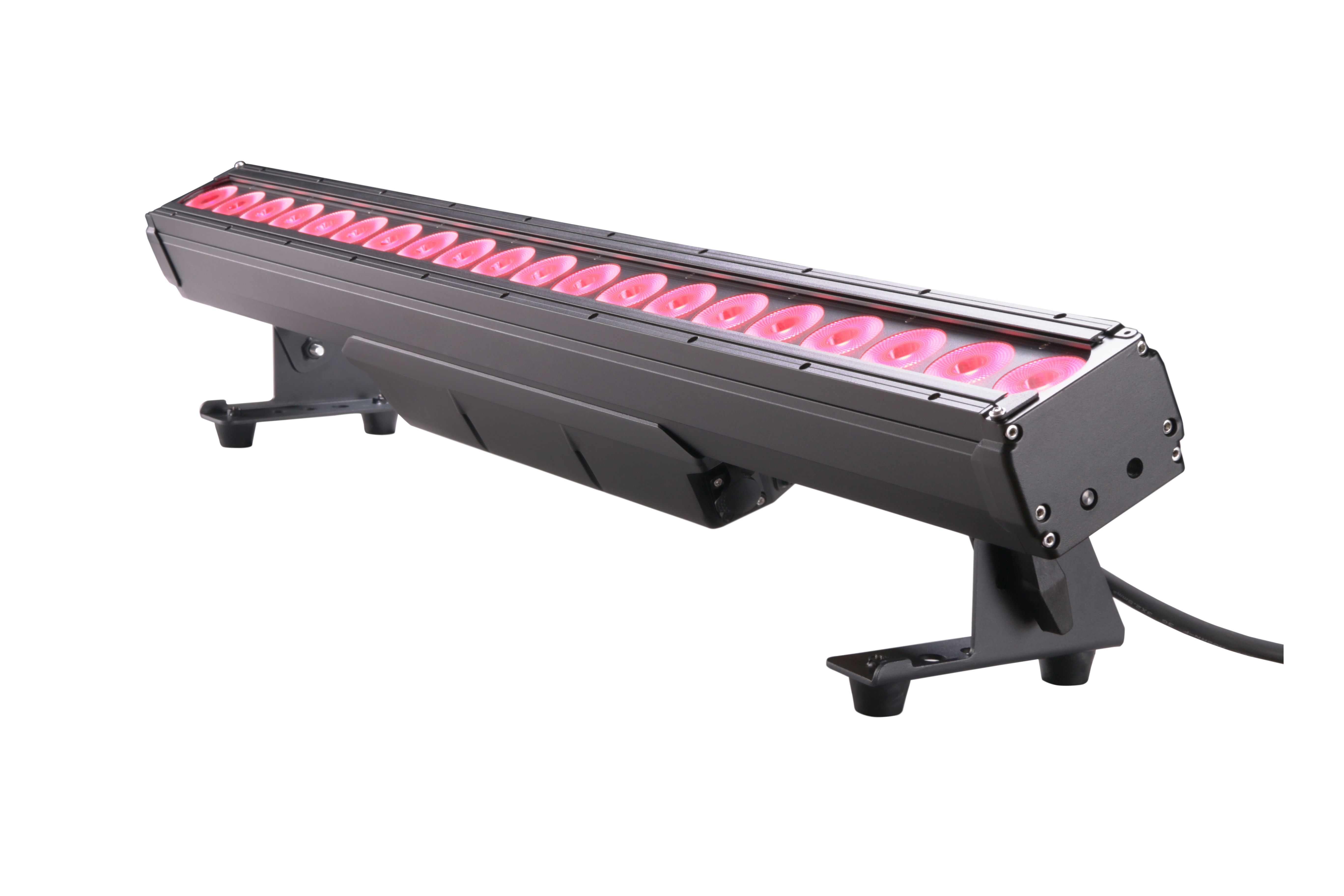
Choosing the correct physical shape determines how well the fixture integrates into your overall design. Classic bowl or blinder styles offer incredible visual weight. They feature massive, exposed circular faces. You will see these utilized heavily for high-impact audience blinders. They act as perfect background elements for rock and roll tours. Festival main stages rely on them heavily for aggressive, punchy aesthetic moments.
Geometric and hexagonal panels serve a completely different purpose. These shapes lock together to form modular walls. They look incredible during modern television broadcasts. DJ booths utilize them to build structured architectural stage designs. These specific panels usually require extensive pixel mapping. Programmers can run complex, sweeping video effects directly across the geometric faces.
Linear strips and halo ring fixtures offer more stylized elegance. Theatrical borders use linear retro strips to frame the performance space beautifully. Stylized music videos love the distinct look of glowing halo rings. Modern corporate events increasingly adopt them. They easily deliver a trendy "steampunk" or hybrid industrial aesthetic to sterile ballroom environments.
You must align the form factor carefully with your primary success criteria. A rock festival demands massive raw output. A high-end broadcast relies on intricate visual geometry. Selecting the right Stage lighting shape guarantees the fixture enhances the intended mood rather than distracting from it.
Large Outdoor Festivals: Prioritize classic oversized bowls. Focus on raw lumen output and IP65 weather resistance.
TV & Broadcast Sets: Prioritize geometric panels. Focus on high CRI, flicker-free PWM, and modular rigging options.
Corporate Galas: Prioritize halo rings. Focus on elegant metal finishes, silent cooling fans, and warm amber shifts.
Integrating modern LEDs introduces distinct technical challenges. Camera refresh rates often clash with LED frequencies. This clash causes visible banding or aggressive flickering on video screens. You must actively address the risk of LED flicker. Define your minimum PWM (Pulse Width Modulation) frequencies before purchasing. Broadcast-safe operation generally requires PWM settings adjustable between >1200Hz and >4000Hz. Higher is always better for slow-motion camera shots.
DMX channel bloat presents a massive logistical hurdle. Pixel-mappable retro lights consume data channels rapidly. A standard fixture might use 5 channels. A pixel-mapped version of that same light might demand 75 channels. Running an entire array of fixtures in extended mode quickly exhausts a standard 512-channel DMX universe. You must plan your network layout and node distribution very carefully.
Rigging and weight limits still apply. LEDs generally weigh less than a conventional tungsten lamp paired with a heavy dimmer rack. However, robust metal retro housings still carry significant physical weight. You cannot hang them haphazardly. Outline the absolute need for proper, certified yoke hardware. Technicians must secure every single unit using rated safety cables. Never cut corners on overhead safety.
Blending LEDs with conventional rigs takes distinct programming effort. You rarely replace every light at once. You must develop strategies for color-matching your new LED retro fixtures with older incandescent lights. Programmers spend hours tweaking custom color palettes. They adjust the LED's green/magenta tint to seamlessly match the aging halogen bulbs still hanging in the rig.
Buying professional lighting equipment requires thorough vendor vetting. For large-scale venue installs or rental houses, B2B considerations dominate the conversation. You must carefully evaluate manufacturer Minimum Order Quantities (MOQs). Buying directly might save money, but high MOQs can wreck your budget. Always verify their warranty policies. Ensure spare parts remain readily available domestically to minimize unexpected downtime.
Safety certifications act as strict, non-negotiable compliance markers. Never integrate uncertified gear into public venues. Union-regulated stages will outright reject unapproved fixtures. Look specifically for legitimate UL, CE, and RoHS markings. Fire marshals actively inspect rigging grids for these exact compliance stickers during routine safety walkthroughs.
Modern fixtures must speak modern languages. Ensure your selected units support advanced control protocols. Art-Net and sACN provide robust network control over standard Ethernet lines. RDM (Remote Device Management) allows your crew to change DMX addresses directly from the console. They must support these features alongside standard 3-pin or 5-pin DMX connectors.
Never skip the pilot testing phase. We strongly recommend requesting a physical demo unit. Hang it in your space. Test the dimming curves intimately. Point your actual broadcast cameras at it. Ensure the PWM frequencies align with your specific shutter speeds. Discovering a fatal flicker issue during a live show is a catastrophic failure. Test thoroughly before committing to a full rig purchase.
Common Procurement Mistake: Buying strictly based on lumen output. A super-bright fixture with a terrible dimming curve and cheap plastic housing will look awful on a professional stage. Always prioritize emulation quality and build materials over raw brightness.
Upgrading your stage rig requires more than just chasing aesthetic trends. A high-quality LED retro fixture is not just a cosmetic prop. It operates as a highly functional, incredibly high-performance lighting instrument. It bridges the gap between nostalgic design and modern engineering demands.
The upfront cost of premium LED retro fixtures can sometimes feel intimidating. However, this initial investment is rapidly offset by long-term gains. You achieve incredible hardware longevity. You drastically improve backstage safety. Most importantly, you drastically reduce your venue's power and infrastructure needs.
Do not rush the transition. Prompt your technical team to review your current power distribution limits immediately. Have them audit your DMX console's channel capacity. Once you understand your exact network constraints, reach out to a trusted manufacturer. Request a formal quote or a hands-on demo unit to begin your upgrade journey.
A: Yes, provided the fixture includes engineered tungsten-emulation software (delayed dimming curves) and amber-shift LEDs.
A: It depends on the IP rating. Most standard retro housings are IP20 (indoor use only). For festivals, explicitly source IP65-rated retro fixtures.
A: While any standard console can trigger built-in macros, achieving complex pixel effects requires a console or software capable of pixel mapping and outputting multiple DMX universes.
A: Assuming standard operating conditions and proper thermal management, the LED engine typically lasts 50,000+ hours, vastly outperforming traditional bulbs.


