
 English
Views: 0 Author: Site Editor Publish Time: 2026-06-05 Origin: Site


Production managers and lighting designers face a unique challenge today. You must balance vintage visual aesthetics alongside the strict technical demands of modern productions. Enter the modern Retro Stage Light. This is not a salvaged antique pulled from a dusty warehouse. Instead, it is a purpose-built fixture. It combines classic tungsten-era housings alongside contemporary LED arrays and smart DMX protocols.
These beautiful units deliver striking looks without the usual historical drawbacks. They serve as primary scenic elements rather than just functional illumination. This guide evaluates the underlying technology driving these popular fixtures. We will help you understand potential implementation risks. Finally, we establish a clear framework for shortlisting these units for upcoming tours or fixed installations. You will learn exactly how to merge classic vibes into cutting-edge Stage lighting setups safely and efficiently.
A true retro stage light merges a classic geometric housing (often hexagonal, circular, or bowl-shaped) with scalable modern lighting technology.
The shift from traditional halogen to LED retro fixtures eliminates historical issues with excessive heat, heavy power draw, and complex dimming racks.
Evaluation requires looking beyond exterior design to assess CRI (Color Rendering Index), DMX channel flexibility, and thermal management.
Proper implementation hinges on calculating rigging weight and verifying flicker-free operation for broadcast or theater performance applications.
Audience-facing fixtures demand meticulous exterior design. Classic reflector bowl designs dominate this category. You often see exposed filament looks mimicking early electrical eras. Rugged metallic chassis provide an industrial, heavy-duty feel. Designers place these fixtures intentionally in the grid to be seen. They do not hide them behind proscenium arches. The geometric shapes—hexagonal arrays or large circular dishes—create structural visual interest even before operators strike the lamps.
Modern fixtures cleverly disguise high-tech components. They replicate the classic "tungsten glow" using dedicated warm-white LEDs. Many incorporate amber shift technology. This programming lowers the color temperature naturally as intensity decreases. Advanced models feature dual-layer designs. A central warm-white core provides the classic punch. Meanwhile, hidden RGB or RGBW background wash arrays illuminate the reflector bowl. This dual approach gives designers massive creative flexibility. You get vintage warmth alongside modern saturated color mixes.
The control infrastructure represents a massive leap forward. Vintage setups required bulky analog dimmer packs. They relied on heavy, multi-core cabling. Modern retro fixtures house onboard DMX512 capabilities. They plug directly into standard stage lighting consoles. Many also support RDM (Remote Device Management). This allows crew members to change DMX addresses remotely from the control desk. Seamless integration means adding vintage aesthetics no longer requires vintage infrastructure.
The transition toward LED technology revolutionized scenic lighting. Let us analyze the distinct advantages driving this industry-wide shift.
Traditional retro lamps relied on high-wattage halogen bulbs. A standard halogen unit easily draws 1000W or more. Scaling a design required massive power distribution. A wall of twenty halogen fixtures demanded industrial generator support. Modern LED equivalents change this math entirely. A comparable LED fixture often operates under 300W. You can daisy-chain multiple units on a single standard circuit. This drastic reduction simplifies generator sizing. It also cuts cabling requirements significantly.
Traditional halogens generate intense, sometimes dangerous heat. They pose operational risks in tight theater spaces. Technicians must wear protective gloves during focus calls. Close-proximity placement near set pieces requires strict fire safety protocols. LED alternatives mitigate these dangers. High-output LEDs generate minimal forward heat. Manufacturers cool them using internal fans or passive heat sinks. The fixtures remain warm, not scalding, to the touch. This allows tighter rigging formations and safer stage environments.
Halogen sources lock designers into a static color temperature. Changing colors meant physically inserting gel sheets. Gels burn out quickly under high heat. LED retro lights utilize a brilliant dual-layer approach. The central source delivers precise, adjustable white light. The secondary background aura effects produce thousands of colors. You can run an authentic warm-white look for one scene. Moments later, you can flood the reflector bowl in deep blue. This dynamic range expands creative possibilities exponentially.
Feature Category | Traditional Halogen Retro Light | Modern LED Retro Light |
|---|---|---|
Power Draw | 1000W+ per fixture | Typically under 300W |
Thermal Profile | Extreme heat (burn risk) | Warm to touch (fan/passive cooling) |
Color Control | Static (requires external gels) | Dynamic dual-layer (RGB/RGBW) |
Dimming Infrastructure | External analog dimmer packs | Onboard DMX/RDM |
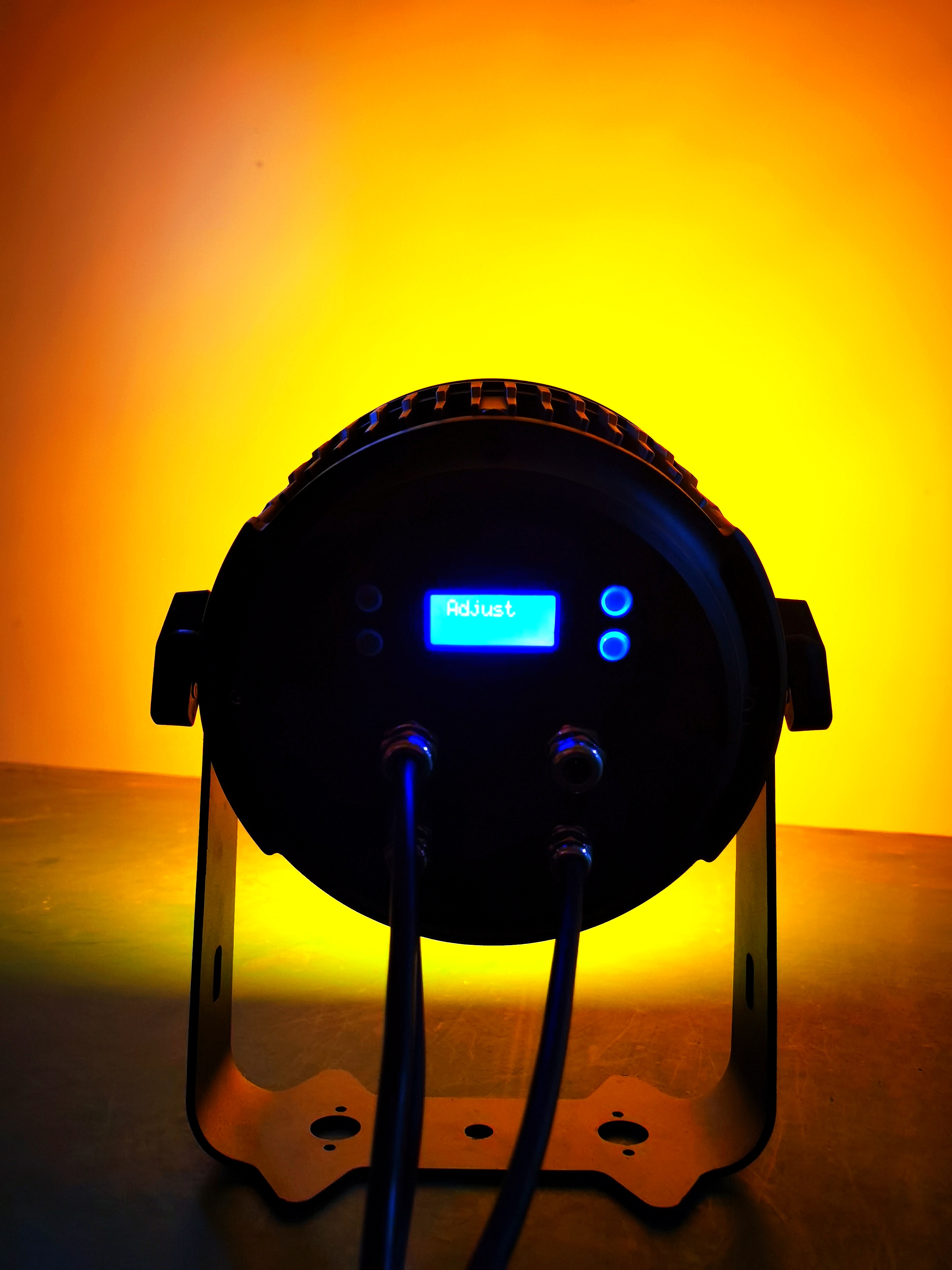
Broadcast environments frequently utilize these fixtures as "eye-candy." They serve as gorgeous background practicals behind talk show hosts or musical guests. Camera sensors easily detect lighting flaws. Therefore, broadcast applications emphasize the need for high refresh rates. Low-quality LEDs cause visible banding or flickering on camera. Broadcast-ready retro lights feature high-frequency PWM (Pulse Width Modulation) dimming. This ensures perfectly smooth, flicker-free capture at any shutter speed.
Touring productions rely on visual contrast. Aggressive moving heads and sharp laser rigs dominate modern concerts. Retro lighting fixtures provide much-needed visual relief. They function as massive visual blinders during musical crescendos. During acoustic sets, they serve as warm scenic elements. They ground the stage design, giving audiences a familiar, tactile visual anchor amidst intense technological displays.
Intimate theater venues require authentic period-accurate warmth. Directors often want the look of 1920s cabaret or mid-century broadcast studios. Actual vintage electrical equipment carries severe safety liabilities. Modern replicas solve this dilemma. They provide the necessary atmospheric glow safely. Actors can perform directly adjacent to the fixtures without heat stress.
The appeal of these designs extends beyond the traditional stage. Architectural firms adapt stage-grade retro fixtures for industrial decor. You see them suspended in high-end retail displays. Hospitality venues use them for atmospheric monochrome uplighting. Their rugged, metallic enclosures perfectly complement exposed-brick aesthetics in modern restaurants and hotel lobbies.
Selecting the right fixture requires rigorous technical evaluation. Use the following numbered framework to vet potential units.
Analyze Photometric Data & Light Quality: Never rely solely on manufacturer aesthetic claims. Verify independent CRI (Color Rendering Index) and TLCI (Television Lighting Consistency Index) ratings. Skin tones look unnatural under poor-quality LEDs. Look for a CRI greater than 90, especially for broadcast use.
Assess DMX Personalities & Pixel Mapping: Evaluate the onboard control flexibility. Does the fixture offer simple 3-channel modes for basic setups? It should also offer 30+ channel modes for advanced programming. High channel counts allow pixel-mapping individual LED segments. This enables complex, fluid chases across a wall of fixtures.
Examine Build Quality & Rigging: These fixtures often hang directly above performers. Examine the yoke durability and tilt-locking mechanisms. Verify the presence of industry-standard Omega brackets. Flimsy mounting hardware presents severe safety risks during rapid tour load-ins.
Evaluate Acoustic Profile: LED engines require cooling. Investigate the fan noise levels (measured in dB). Aggressive cooling fans disrupt noise-sensitive environments like theater stages or broadcast studios. Look for models featuring "silent mode" fan control via DMX.
Retro designs utilize heavier metal chassis to maintain visual authenticity. A standard plastic-housing wash light might weigh 15 pounds. A large retro bowl fixture can easily exceed 35 pounds. You must factor in this extra mass when calculating truss load limits. Clustered arrays quickly consume available weight capacities. Always consult your head rigger before specifying dense walls of metallic retro fixtures.
Best Practice: Distribute weight evenly across spans. Use secondary safety cables specifically rated for the fixture's total mass.
Traditional halogen bulbs cool slowly when powered down. This creates a natural "fade to warm" effect. Replicating this physics using instant-off LEDs presents a massive programming challenge. Test units for stepped versus smooth low-end dimming. A poor LED dimming algorithm drops abruptly from 5% to zero. A high-quality engine utilizes 16-bit dimming curves to smooth out the bottom end. It perfectly mimics the sluggish fade of a hot tungsten filament.
Common Mistake: Failing to test the dimming curve in person. Always request a demo unit. Run a slow 10-second fade to zero. Watch for any visible stepping.
Large arrays require meticulous cable management. Planning your power-linking strategy prevents show-stopping failures. Use robust locking connectors, such as PowerCON True1, to chain units together safely. Pay close attention to data daisy-chaining. Long runs across large retro wall arrays invite signal degradation. Terminate your DMX lines properly. Insert optically isolated DMX splitters to maintain signal integrity across massive fixture counts.
Selecting a retro lighting fixture is fundamentally about securing modern reliability wrapped inside a vintage aesthetic. You no longer need to sacrifice safety, power efficiency, or control flexibility to achieve classic looks. These modern units elevate stage designs by providing stunning geometric shapes and warm, nostalgic illumination.
To ensure a successful deployment, keep these next steps in mind:
Request detailed spec sheets and independent photometric data for any shortlisted fixture.
Test a demo unit in person to rigorously evaluate low-end dimming curves and camera compatibility.
Calculate total rigging weights and map out your power distribution before committing to a full rig order.
Consult your console programmer to confirm your DMX universe count accommodates high-channel pixel mapping modes.
A: Yes, they standardly feature 3-pin or 5-pin DMX inputs and are mapped like any conventional intelligent fixture. They plug seamlessly into modern lighting networks and respond instantly to standard console commands.
A: Generally, no. They are primarily designed as scenic visual elements, eye-candy, or localized effect lights rather than front-of-house key lights. Their wide dispersion makes them better suited for atmospheric background effects.
A: High-tier models use high-frequency PWM (Pulse Width Modulation) dimming to ensure flicker-free operation. However, budget models must be verified prior to broadcast use, as lower refresh rates cause visible camera banding.
A: It is an LED programming feature that shifts the color temperature warmer (more amber/red) as the light is dimmed. This algorithm mimics the physical cooling behavior of a traditional halogen filament perfectly.


