
 English
Views: 0 Author: Site Editor Publish Time: 2026-06-12 Origin: Site


The demand for nostalgia in live events has made vintage aesthetics highly desirable today. Audiences crave the visual warmth of classic, analog shows. However, using decades-old equipment introduces significant technical and safety risks to your production. You cannot simply plug in legacy gear and expect flawless performance. Event producers and lighting designers face a complex challenge. They must balance the authentic amber glow of classic fixtures against the strict demands of modern rigging, limited power capacities, and digital control systems. Overloading circuits or risking rigging failures remains a real danger when working with older units. Finding the perfect balance requires technical insight and careful planning. This article provides a pragmatic guide to evaluating, selecting, and implementing an effective setup. You will learn how to capture a classic aesthetic safely. We will explore ways to integrate nostalgic designs without compromising modern production reliability.
Achieving a vintage atmosphere requires balancing authentic fixture housing (like classic Par Cans and blinders) with precise color temperature control (2200K–3200K).
Modern retro-style LED fixtures offer the visual appeal of tungsten without the restrictive heat generation and high power draw of legacy equipment.
Integrating retro stage lights into modern DMX ecosystems requires specific attention to dimming curves to avoid stepping or abrupt cutoffs.
Safe implementation depends on strict power auditing (especially if using genuine halogen) and verifying IP ratings for outdoor event scenarios.
What exactly defines a vintage aesthetic? Authentic retro setups rely on specific visual signifiers. You will notice visible glowing filaments and large reflective housings. Classic Fresnel lenses and hexagonal blinders instantly signal a bygone era. The defining trait of Stage lighting from the past is a warm, amber glow. Modern LED washes often look flat and artificial in comparison. Audiences intuitively recognize the organic look of older fixtures. They associate these designs with classic rock concerts and historic theater productions.
Achieving this specific look requires precise color temperature control. True vintage lighting lives entirely within the 2200K to 3200K range. At 2200K, the light mimics a deeply dimmed, glowing ember. At 3200K, it provides the standard, bright studio tungsten output. A high Color Rendering Index (CRI >90) is absolutely non-negotiable here. When you capture a vintage wash on camera, the skin tones must look natural. Low-quality fixtures often emit a muddy, greenish-yellow tint instead of true amber. This poor color rendering ruins the nostalgic illusion. It makes performers look sickly on video feeds.
Designers face a strict technical evaluation problem. They must choose between actual vintage hardware and modern emulators. Actual vintage hardware uses real tungsten bulbs. These units require heavy dimmer racks and massive power supplies. Conversely, modern "retro-look" fixtures run on efficient LEDs. However, they require careful programming to mimic analog fade times. LEDs naturally snap off instantly when power drops. Halogen bulbs fade slowly as the filament cools. Replicating this thermal lag digitally is a major hurdle in retro stage design.
Before designing a stage plot, you must understand your hardware options. The market provides distinct categories of fixtures to achieve a nostalgic look. We can group these into three primary areas.
These units represent the original, historically accurate hardware. They are best for permanent installations with robust power infrastructure. They also excel in close-up video work requiring a perfect continuous spectrum of light. Nothing completely matches the continuous color spectrum of burning tungsten.
However, authentic units carry severe limitations. They produce massive heat output. They demand high amperage draws that easily trip standard venue breakers. Furthermore, you cannot plug them directly into a modern control board. They require heavy, external DMX dimmer packs. Finally, the glass bulbs remain highly fragile during transport. Road crews must handle them with extreme care to prevent filament breakage.
Modern manufacturers now build LED fixtures designed specifically to look old. These are best for touring setups, corporate events, and venues with limited power. You can daisy-chain dozens of these units together on a single circuit.
When evaluating emulators, look for fixtures featuring "tungsten emulation." This feature creates an automatic amber shift during dimming. As you lower the intensity, the light gets warmer, perfectly mimicking a halogen bulb. You should also look for individual pixel mapping capabilities. Pixel mapping lets you create complex visual chases across the face of the fixture.
Be aware of the limitations in lower-tier models. Cheap units may exhibit visible PWM (pulse-width modulation) flicker on camera. They also frequently suffer from poor dimming resolution. They might visibly "step" or jump abruptly at the bottom 10% of the dimming curve instead of fading smoothly.
You must differentiate between scenic elements and illumination tools. A single Retro Stage Light often serves as a practical scenic element. It faces the audience directly to provide visual impact. We call this "eye candy." In contrast, you use wash lights to actively illuminate the performers. You rarely use eye candy fixtures to light faces. Their large reflectors and unshielded filaments create harsh glares. Always separate your scenic lighting from your primary subject lighting.
The following chart summarizes the core differences between traditional halogen and modern LED emulators. Use this framework to guide your hardware selection process.
Evaluation Metric | Authentic Halogen/Tungsten | Modern LED Emulator |
|---|---|---|
Power Consumption | Extremely High (Requires dimmer racks) | Low (Standard wall circuits often suffice) |
Heat Generation | Severe fire and burn hazard | Minimal (Cool to the touch) |
Color Spectrum | Perfect continuous spectrum (CRI 100) | Simulated amber (CRI varies, aim for >90) |
Dimming Behavior | Natural thermal lag (smooth fade) | Requires software emulation curves |
Hardware Durability | Fragile glass bulbs and filaments | Robust solid-state diodes |
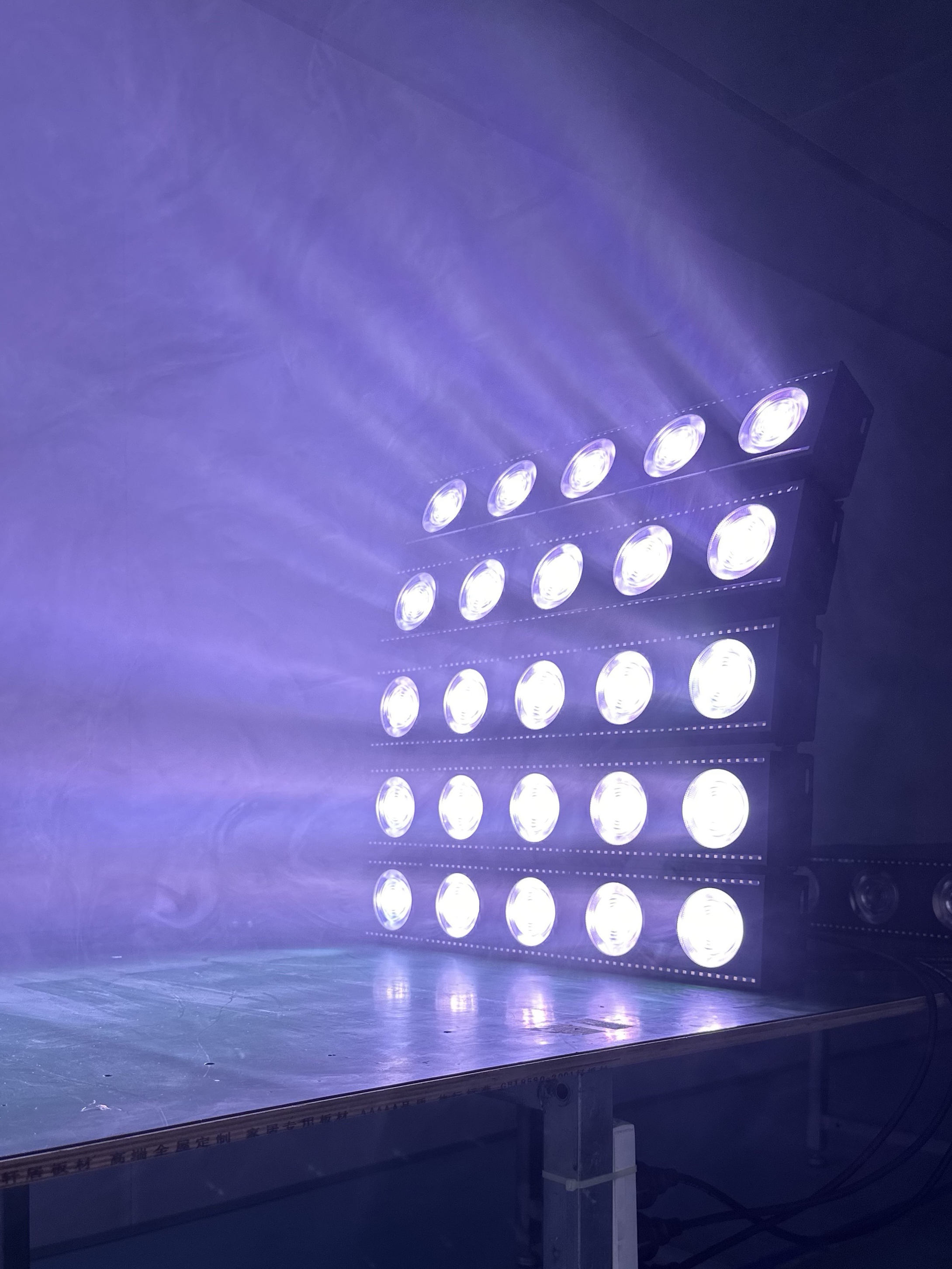
Successfully deploying these fixtures requires strict technical oversight. A vintage look should not compromise modern control and safety standards. Let us break down the essential technical criteria.
Legacy tungsten fades slowly due to thermal lag. When you cut the power, the thick metal filament takes a moment to cool. This creates a beautifully smooth decay. Evaluate modern retro fixtures based on their ability to mimic this analog behavior. The best modern fixtures apply a delayed, smooth dimming curve via DMX. You should select a "square law" or "halogen simulation" curve in the fixture menu. This prevents the LED from snapping off aggressively. Proper DMX mapping ensures your new units blend seamlessly with any existing conventional fixtures.
Power management remains the most critical engineering task. You must calculate amperage draw carefully. Use the standard formula: Amps = Watts ÷ Volts. Consider a classic 6-lamp vintage halogen blinder. If each bulb draws 600 watts, the fixture pulls 3600 watts. On a standard 120-volt system, that single unit draws 30 amps. It will instantly blow a standard 20-amp venue breaker. In contrast, an LED equivalent might draw fewer than 300 watts total. This translates to less than 3 amps. LED units allow you to scale up your design massively without upgrading venue power.
Outdoor events present unique compliance challenges. Genuine vintage fixtures rarely feature modern weatherproofing. They lack proper Ingress Protection (IP) ratings. Water striking a hot halogen lens will shatter the glass instantly. If you produce outdoor events, you must use modern IP65-rated replicas. IP65 ensures the internal electronics remain sealed against dust and heavy rain.
Rigging safety is equally vital. Older metal housings use heavy steel. They weigh significantly more than modern lightweight alloys. You must audit your truss load limits carefully. Always attach certified steel safety cables to the main yoke of every heavy vintage housing. Never rely on the primary clamp alone.
Once you secure the right hardware, execution dictates the final result. Designing a cohesive stage plot requires a methodical approach. Follow these actionable steps to maximize the nostalgic impact.
Placement and Silhouetting: Use large, hexagonal retro fixtures as a backdrop. Position them upstage, facing the audience directly. This placement creates striking, dramatic silhouettes of the performers. Keep the front stage lighting warm and directional. Avoid using a flat, modern, evenly-spread wash. Contrast is essential for a dramatic period look.
Syncing Sound and Light: Vintage aesthetics clash violently with rapid, aggressive strobing. Do not program EDM-style strobe chases on classic blinders. Instead, program slow chases and audio-reactive fades. Match the visual rhythm to the warm, analog feel of acoustic or retro-style performances. Use sine-wave generator effects in your lighting console for smooth, rolling intensity changes.
Integrating Haze and Gobos: Atmospheric haze highlights the distinct, defined beams characteristic of older PAR lamps. Use a quality water-based hazer to create an even suspension in the air. The haze catches the amber light, enhancing stage depth. However, you must use haze sparingly. Heavy fog will overpower the stage and obscure the classic fixture housings. Add simple break-up gobos to your front lights to create textured, moody illumination on the stage floor.
You are now ready to finalize your equipment list. Taking the right steps now prevents major failures during load-in.
Conduct a Thorough Power Audit: Speak directly with the venue electrician. Request the exact circuit counts and amperage limits for the stage. If the venue lacks dedicated, high-capacity circuits, rule out genuine halogen immediately.
Adopt a Hybrid Approach: We highly recommend mixing technologies. Use retro-style LEDs for audience-facing eye candy. They provide the look without the heat. Then, use modern, high-CRI wash lights with amber gels for subject illumination. This guarantees the performers look sharp on camera while preserving the background aesthetic.
Perform Strict Vendor Verification: When renting or buying gear, request detailed documentation. Ask the vendor for DMX channel profiles, photometrics, and dimming curve behavior sheets. You need to ensure the fixtures align perfectly with your existing console ecosystem. Testing a unit in the warehouse before the show is strongly advised. Check the PWM frequency with your smartphone camera to ensure it does not flicker on video screens.
Creating a vintage atmosphere is a calculated technical exercise, not just a simple aesthetic choice. You cannot achieve reliable results by merely plugging in outdated hardware. It requires a firm grasp of color science, power distribution, and modern control protocols. By understanding the visual signifiers of the past, you can replicate them intelligently today.
We recommend prioritizing modern retro-style LEDs with built-in tungsten-emulation over legacy hardware. This approach minimizes your technical risks. It reduces power overhead dramatically and ensures seamless show control. Start your design process by conducting a strict power audit of your venue. Then, source high-CRI fixtures that match your safety requirements. Embrace the hybrid design model to deliver a nostalgic, immersive experience that runs flawlessly from the first cue to the final blackout.
A: Yes, but it requires precise DMX programming to match color temperatures accurately. You must also apply artificial fade delays to the LEDs. This programming ensures they match the natural, slow thermal fade of the halogens. Without delays, the LEDs will snap off instantly, ruining the cohesive look.
A: Only if they are modern replicas with an IP65 rating or higher. Authentic vintage fixtures are rarely weatherproof. They pose severe electrical hazards and fire risks if exposed to moisture. Hot glass lenses can also shatter instantly upon contact with rain.
A: You must route the fixtures through an external DMX dimmer pack. You cannot plug them directly into a data network. Ensure the dimmer pack is specifically rated for the high wattage and amperage of traditional tungsten or halogen bulbs to prevent circuit overloads.


